FAMINE HIT EASTERN AND N. E. PROVINCE by Mohamed Ali (AMIN)
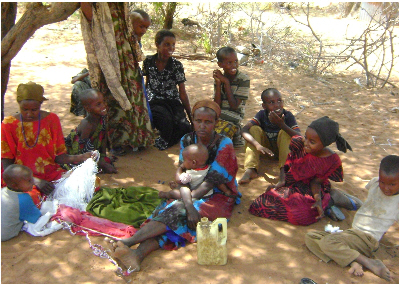
A terrible famine has forced 200 people from kyuso district in Eastern province to flee their homes to the neighboring tana river district inserch for food and water. Enduring the hunger pains they trekked 75 km for three days before ending their journey in poka location in tan river district.
The 86 families were forced to contend with wild fruits and succulent leaves as they moved to their unknown destination. “after we went hungry for days ,watched desperately the withering crops and the endless cry of the children who could not bear with the situation we were forced to move and search food and water “ said muse mutunguli a father of 6 children who fled from machungwa village.
 |
 |
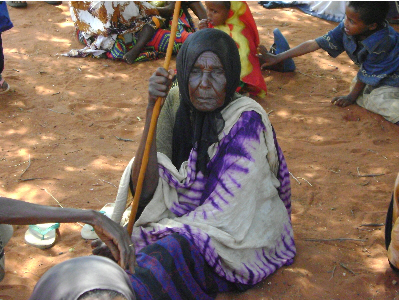
The journey was tiresome, hectic dangerous and desolate said mbula musembi who narrated how they met herd of elephants in the thickets as they gathered fruits and leaves during their hope match. Among the displaced drought victims 113 are under aged children who survived both the hunger threat and the long journey. The resident of poka location led by the area councilor Mowlid abdi Ali received the displaced with a shock and gave them an emergency response.
They were made to camp while everyone in the village rushed home to donate the little they possessed others milked their camel and Goats that were at the watering points to save the lives of imperiled children and adult .they also donated clothings to the displaced, settled them at designated piece of land and called for the intervention of the Kenya Red cross through phone.
“we were under grave perils of the drought but having found the conditions of the displaced from kyuso district we were forced to part with the little we could afford” said Halima Abdi.
Kenya redcross regional boss Ibrahim Hussein said both food and non food were dispatched and more was in the pipeline he however called for the intervention of welwishers to aid them interms of shelter ,water and clothings.
 |
 |
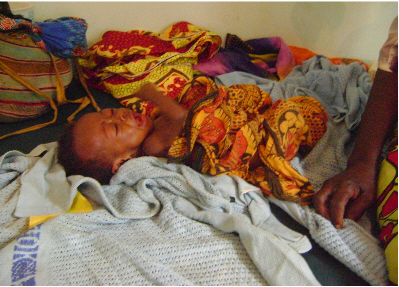
Most of the children in the area were malnourished forcing the medics in Kyuso and Mwingi Districts to admit them with provision of unimix donated by the Kenya red cross . in mwingi district hospital medical boss DR Harun Kimani said more than 50 malnourished children were admitted in every week..According to the the medic some parents of the malnourished children admitted starved to death due illness related with hunger.
It was in the district where 13 year old child Kilonzo kiule was reported to have died after he overeat raw wild fruit locally known as mbuu due hunger.
Despite denials by the government his father Stephen kiule a father of 7 insist that his son could not have died if it were not hunger that forced him to feed on the raw wild fruits that blocked his intestines.
The vice president Kalonzo Musioka who visited the beraved family donated ksh 10,000 to them while government officials led mwingi DC Peter kinuthia gave the family a sack maize which they had using by time nation visited his home. Many areas including Fafi district ,lagdera ,mandera ,Garissa ,wajir and tanariver are raveging due to the drought.
Residents owliya and abdisamat in Garissa district trek 100 km to search for water from the river tana after their pans dried up.
Their plea for water from the government and other well-wishers was yet to bare fruits said cllr Ismail Mohamed Garat.
IN Wajir an estimated 150,000 famine-stricken families are in need of urgent food aid as the current crisis shapes into a real disaster.
Majority of those affected by the current predicament are survivors of the 2006 drought, 50% of who relied on relief handouts by government and aid agencies.
The district was the centre of the last ravaging drought in Northeastern that claimed about 100 people and 80 per cent of the livestock
According to Wajri East DC Mr. Henry Ochako the food security situation is depressing among pastoralist families.
"Because of the drought and the high prices, food is beyond the reach of the common man" said Mr. Ochako.
The UN agency WFP, said shortage of relief food in its stores in Wajir town is likely to cause relief-dependent households to miss their share this month. Hundreds of families living in the periphery of the town are at risk of starvation this time.
According to an assessment the short and long rains of 2008 completely failed over large areas of the vast district, adversely impacting the lives of herders.
Now a cute shortage of water is worrying many herders living in the pastoral villages of Wajir district.
"Most of the pans and boreholes have dried up, some people have already deserted their homes in search of water and pastures" said Hussein Igaal at Jarba a drought hit village some 30KM East of Wajir.
Water shortage is making water catchments areas prone to conflict. Reports indicated that thirsty wild animals stormed water points at broad daylight.
Most parts of the arid district are in the grip of extreme drought. A combination of a years -long rainfall deficit and an acute dry spell have sent water levels across grazing areas to record lows.
The dry conditions have dropped the levels of water of about 10,000 shallow wells district wide.
The district steering group which is formed by government departments and NGOs are working out plans to track water to hundreds of vulnerable families.
"We are willing to track water to vulnerable families who are now in search of water" said Mr. Ochako.
The conditions are reminiscent of the infamous 2006, the last time the area was hit with extreme and extended drought.
“If we continue with this trend, the raging thirst is likely to turn tragic and we’re going to really have to watch things" says Mr. Hussein Abdi a pastoralist.
Between the Months of Janurary and March the season is typically very dry, with less than an inch of rain per month on average.
The meteorological department is painting a dismal picture with little anticipation for the required rains.
In the border district of Mandera the situation is too fragile, without an increase in precipitation soon, even River Dawa is likely to dry completely in the next few days.
A DSG (District Steering Group) report says hunger is widespread among households in Mandera particularly in the Eastern and central parts.
Rates of acute malnutrition among children under the age of five have risen steeply to between 18 and 30 percent .
"This is particularly worrying because 15 percent is considered an emergency level" said Abdi Ahmed an aid worker.
Resident area calling for urgent assistance as it is clear that the rains had failed and there was an impending aggravation of the crisis
Kenya Red Cross officials predict a severe livelihood crisis as the drought intensifies. "An increasing number of pastoralists are not able to provide for themselves" said Mr. Khalif Dugaal co-ordinator of Mandera branch Red Cross Society.
Many pastoral communities are the hardest hit particularly by the failed rains forcing hundreds of herders to cross the porous border into Ethiopia and Somalia .
"Our assessment found that the worst affected are the eastern and central parts where acute shortage of food is worrying" said Mr. Dugaal.
Red Cross said an estimated 79,000 people in Mandrea Central, 60,000 in Mandera East and another 80,000 people in Mandera West are staring hunger in their faces.
Last years flash floods along the banks of seasonal River Dawa displaced about 10,000 farmers who have since abandoned their line of business.
"This has added up to our suffering" said Mandera town council vice Chairman Abdrihaman Haji. "Everyside of life is shocking, there is no water and no food" said Mr. Haji.
Successive locust invasion in the past two years has also forced about 80 percent of the farms along the river to be destroyed.
"Farming is virtually inexistent in Mandera, because of the drought, the locusts and the floods" said Omar Abdullahi a former farmer.
Food insecurity in the border district especially in drought hit pastoral areas of Warankara, Libehiya, Dandu, Kutulo Malkamari and Takaba is worrying.
Livestock prices have fallen sharply with reports of drought-related diseases like goat plague (PPR) and Caprime Pleuro Pneumonia (CCPP) affecting animals in large numbers.
A spot-check indicated that prices of goats and cattle have fallen by more than 60 percent. The market price of a cow has dropped from Sh 25,000 to about Sh7,000 over the past few week
Aminaliamed@yahoo.com
Nfdonline-Garissa